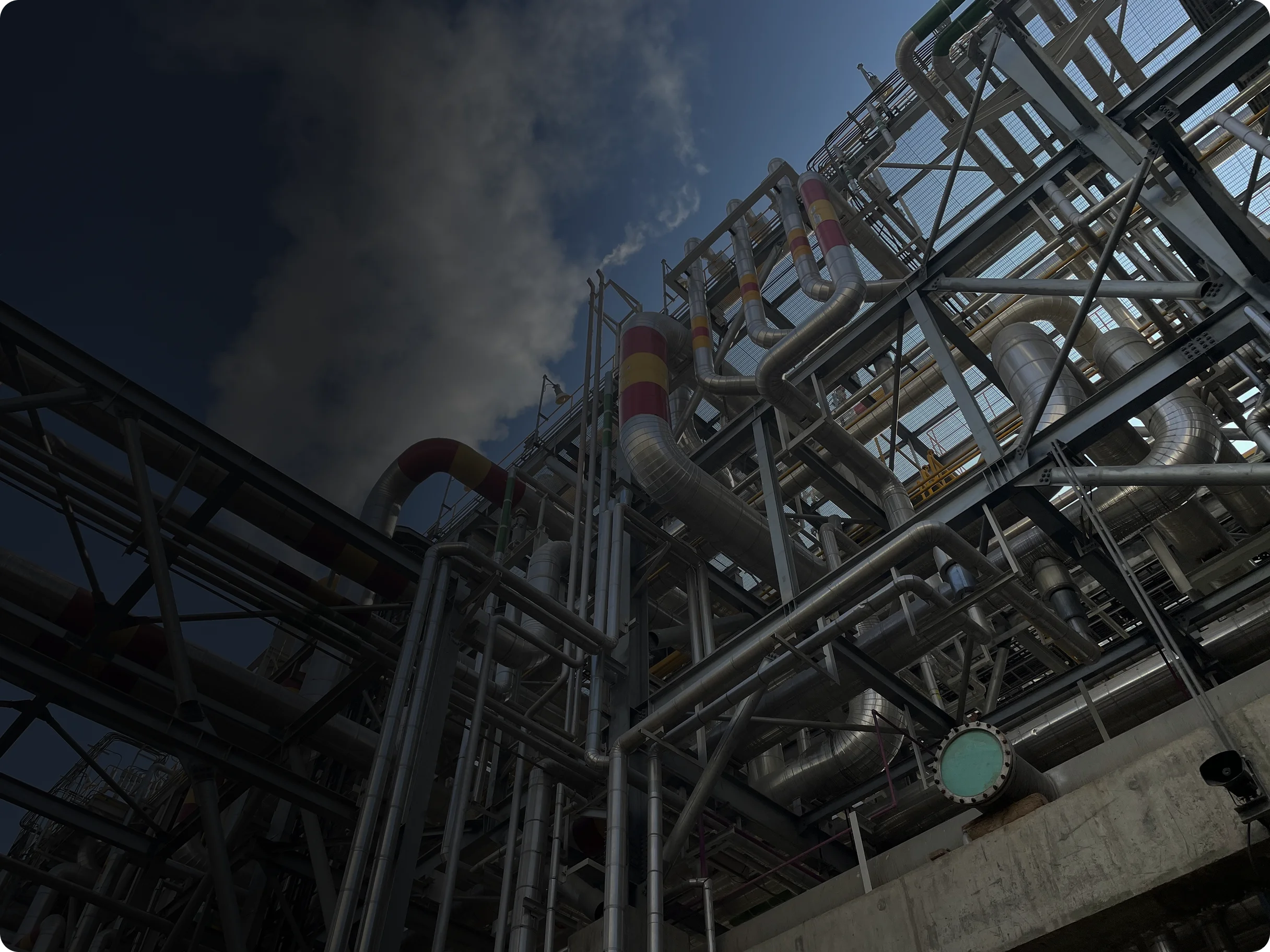
How biogenic CO₂ capture works at a biogas plant

Upgrading raw biogas leaves a CO₂ stream that most plants vent. Here is what it takes to turn that stream into a certified product.
A biogas upgrading plant separates methane from raw biogas. What remains is a CO₂-rich off-gas — typically 96–99% pure — that is usually vented. Capturing it costs far less than capturing CO₂ from flue gas, because the concentration is already high.
Step 1: pre-treatment
Trace hydrogen sulphide, siloxanes and volatile organics have to go first. Activated carbon beds handle most of it; the sizing depends on your feedstock, so a gas analysis is the starting point of any project.
Step 2: drying and liquefaction
The gas is dried to a dew point below −60 °C, then compressed and cooled until it condenses at roughly −25 °C and 18 bar. Boil-off from the storage tank is routed back to the compressor rather than lost.
Step 3: quality control
Before the product goes to a food customer, an online analyser checks oxygen, moisture and total hydrocarbons against ISBT limits. Any batch outside spec is recirculated instead of shipped.
Frequently asked questions
How much CO₂ does a typical biogas plant lose?
A 500 Nm³/h upgrading plant vents roughly 4 000 tonnes of biogenic CO₂ per year — enough to justify a capture unit at current market prices.
You may also need


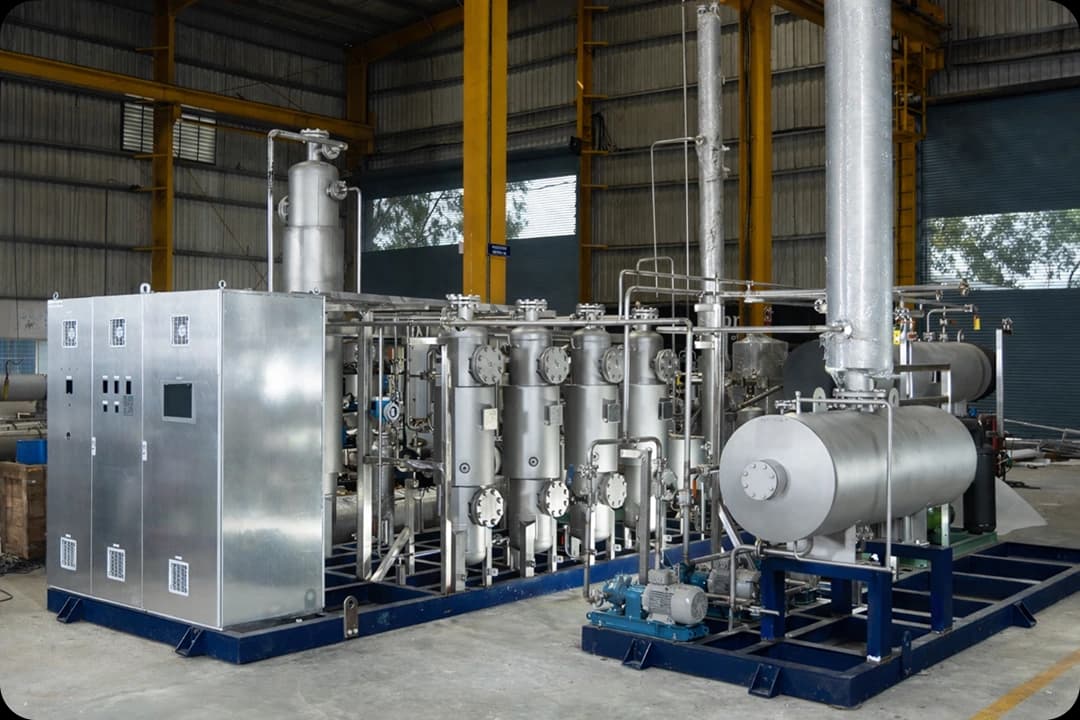
CO₂ capture units
Modular CO₂ capture unit MC-500
Model: MC-500
Containerized unit capturing up to 500 kg/h of CO₂ from biogas or flue gas, delivered pre-assembled and tested.
Price on request
On request
Related articles
Technology
Modular or containerized: choosing a CO₂ plant format
The decision is rarely about capacity alone. Site constraints, project timeline and how certain you are about future volumes matter more.
5 min read
Standards
Food-grade CO₂: what ISBT and EIGA actually require
Purity percentage tells you almost nothing on its own. What matters is the list of trace contaminants and the limit set against each one.
6 min read